
Fire safety in blocks of flats: what must your RTM company do?
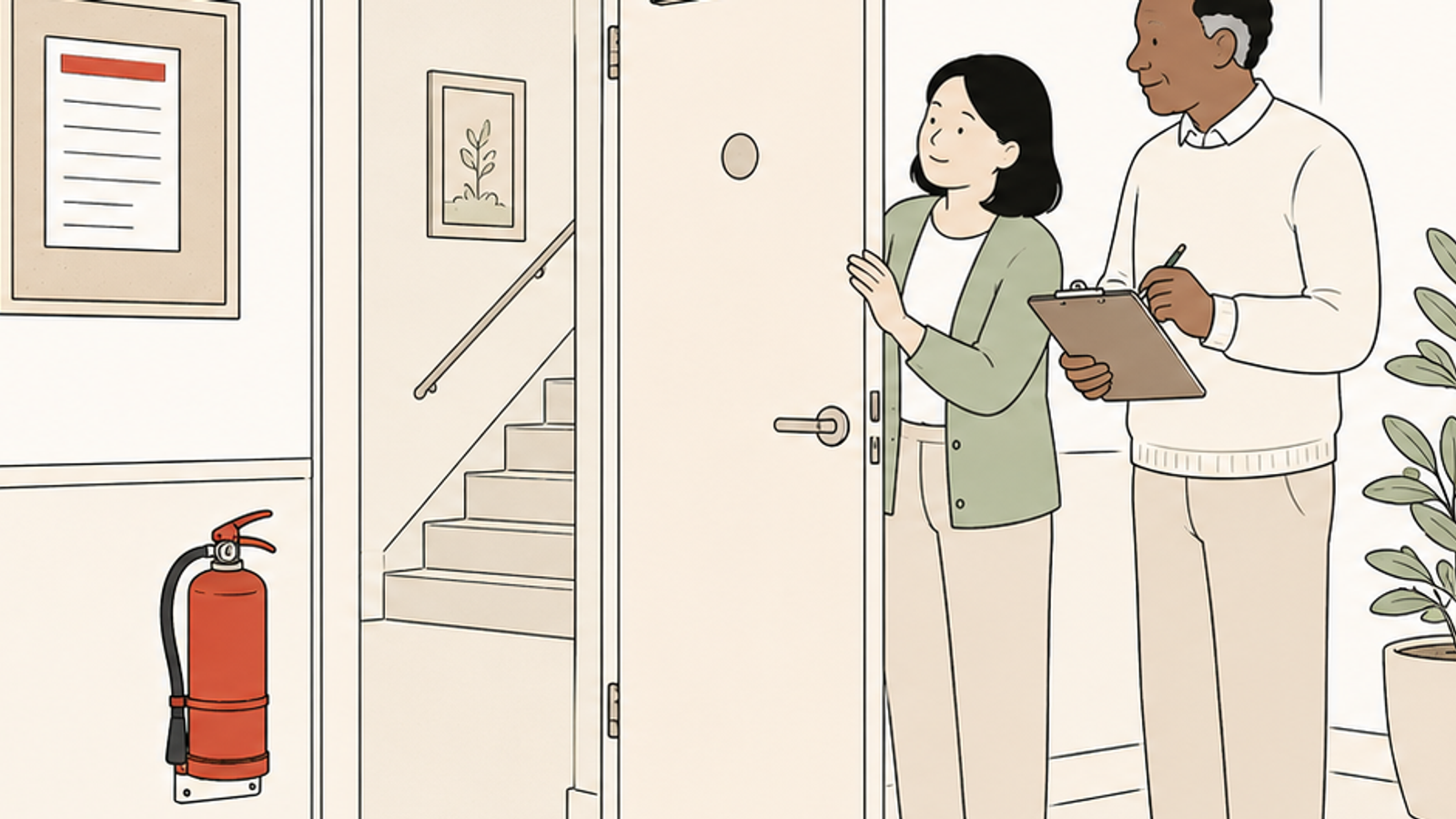
This is the part of the job to take most seriously, and the part where the law has changed most. Since Grenfell, the rules for anyone running a block of flats have been rewritten, and when your Right to Manage company takes over, those duties come with it. Here is what they actually are, in plain English.
The short version. Your RTM company becomes the "responsible person" for fire safety in the building's shared parts, its structure and external walls, and the flat entrance doors. That means a fire risk assessment, recorded in full, acted on and kept under review, plus routine checks that scale with the height of your building, and clear safety information for every resident. Alongside fire sit a handful of other compliance duties, asbestos chief among them. None of it requires heroics. It requires the right specialists, good records, and a company that takes it seriously.
In this guide:
- Who is responsible for fire safety in a block of flats
- The fire risk assessment
- Checks that scale with your building's height
- Tall buildings: the Building Safety Act regime
- The compliance duties nobody tells you about
- Bringing in specialists while staying in charge
Who is responsible for fire safety in a block of flats?
The main law is the Regulatory Reform (Fire Safety) Order 2005, as amended. It puts duties on the "responsible person", which is whoever has control of the building's shared parts. Once your building takes over through Right to Manage, that is the RTM company. The company must take reasonable steps to reduce the risk of fire and make sure people can escape safely if there is one. The rules cover the common parts, such as shared entrances, corridors and staircases, and, following the Fire Safety Act 2021, they clearly extend to the structure, the external walls, including cladding and balconies, and the flat entrance doors. One thing worth knowing early: there can be more than one responsible person in a building, depending on how it is owned and used, and the law expects them to identify each other and work together.
The fire risk assessment
The foundation of everything is a suitable and sufficient fire risk assessment covering the common parts, the flat entrance doors and the external walls. Since 1 October 2023 the rules here tightened for everyone: the assessment must now be recorded in full, where previously only significant findings had to be written down and only in certain buildings. The company must also record its fire safety arrangements, meaning how fire safety is actually managed day to day, record the name of whoever carries out or reviews the assessment, and keep a UK contact address that is shared with residents. For anything beyond the very simplest building, commission a competent professional fire risk assessor, then treat the report as a to-do list, not a filing exercise: the duty is to act on what it finds, put problems right, and review it regularly. Residents should also know what to do if there is a fire and understand the safety measures in the building.
Checks that scale with the height of your building
In January 2023 the Fire Safety (England) Regulations 2022 came into force, putting most of the Grenfell Tower Inquiry's Phase 1 recommendations into law. They apply in England, and the duties stack up as buildings get taller:
- Every building with two or more flats: give residents fire safety instructions, including how to report a fire and what to do if one starts, plus information on why fire doors matter. This goes to new residents and is re-issued annually.
- Buildings over 11 metres: check all fire doors in the common parts every quarter, and use best endeavours to check every flat entrance door once a year.
- High-rise buildings, at least 18 metres or 7 storeys: monthly checks of lifts for firefighters and key firefighting equipment, with faults reported to the fire and rescue service if not fixed within 24 hours, a secure information box holding floor plans and the responsible person's contact details, electronic building plans and external wall information shared with the fire and rescue service, and wayfinding signage visible in low light.
Tall buildings: the Building Safety Act regime
If your building is at least 18 metres or 7 storeys with two or more flats, it is a "higher-risk building" under the Building Safety Act 2022, and a further regime applies on top of everything above. The building must be registered with the Building Safety Regulator, and the "principal accountable person", which for an RTM building will usually mean the RTM company, is legally responsible for assessing and managing the building's safety risks. This is genuinely specialist territory, so if your building is in this category, build professional support into the plan from day one. Two honest reassurances. First, the regulator has stated that where the accountable person is an RTM or resident management company, enforcement for breaches would normally be taken against the company itself rather than individual directors. Second, most of the buildings taking this route, converted houses and small purpose-built blocks, are nowhere near this regime.
The compliance duties nobody tells you about
The one most often missed is asbestos. If your building was built or refurbished before 2000, the law places a duty to manage asbestos in the common parts, the corridors, stairwells, plant rooms and roof spaces, though not inside individual flats. In practice that means finding out whether asbestos-containing materials are present and in what condition, presuming materials contain it unless there is strong evidence they do not, keeping an up-to-date record and management plan, and telling any contractor before they drill into anything. It matters because the risk lands on the people who do work in the building, which in a resident-run block may include your neighbours.
Depending on what your building has, a few more routine items usually join the list: a legionella risk assessment for shared water systems, regular lift servicing with periodic thorough examinations, which insurers typically require, periodic inspection of the communal electrics, where a five-yearly cycle is the common benchmark, and a Gas Safe registered engineer for any work on communal gas plant. These are steady, schedulable jobs, not surprises.
Bringing in specialists while staying in charge
None of this means directors climbing ladders or interpreting fire engineering reports themselves. It means commissioning the right specialists, the fire risk assessor, the asbestos surveyor, the lift engineer, the way any well-run organisation does, and staying the people in charge of what happens next. Keep every certificate, assessment and check in one place, reviewed once a year. Budget the recurring items as fixed annual lines in the service charge, as covered in our guide to RTM service charges, and remember that bigger safety works can trigger Section 20 consultation like any other major job. Done this way, safety becomes the strongest argument for resident control, not against it: the people checking the fire doors live behind them.
Where this leaves you
Fire and building safety is the least negotiable part of running a building, and also the most systematic: an assessment, a schedule of checks, clear information for residents, and specialists where the law or good sense requires them. It sits inside the wider role our overview of RTM director responsibilities sets out. Next in this series we look at buildings insurance and what still sits with the freeholder. And if your building has not taken control yet, check whether it qualifies.
Sources and further reading
- LEASE: Fire safety for resident directors
- LEASE: Responsibilities for fire risk assessments
- GOV.UK: Fire Safety (England) Regulations 2022
- London Fire Brigade: Changes to fire safety law from October 2023
- HSE: The duty to manage asbestos in buildings
- legislation.gov.uk: Regulatory Reform (Fire Safety) Order 2005, Building Safety Act 2022
Ready to take control of your building?
See what you could save and find the right route for your block.