
RTM service charges: how do you set the budget and run the money?
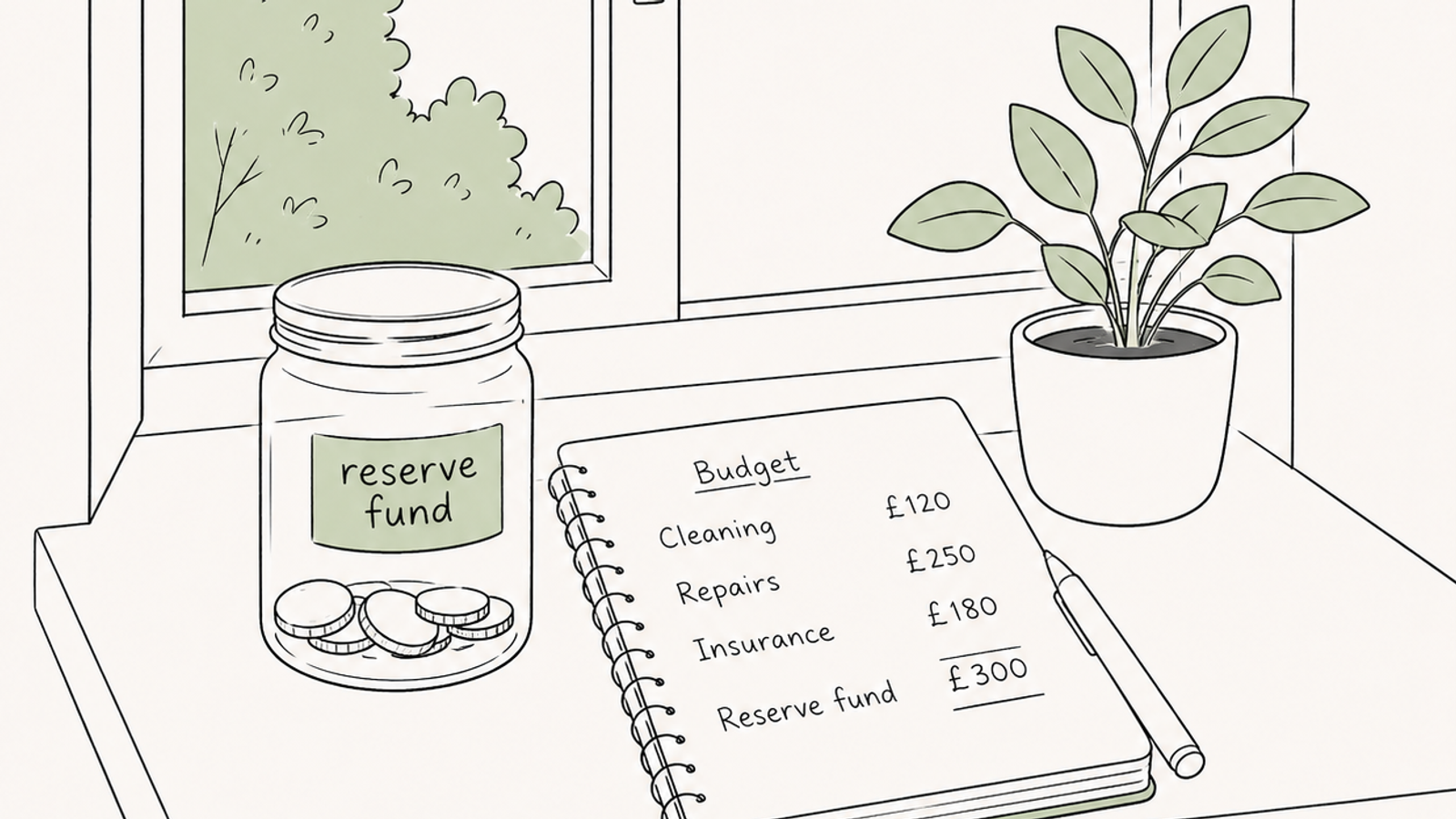
For a lot of new directors, the money is the daunting part. Once your Right to Manage company takes over, you set the budget, collect the service charges and plan for the big costs down the line. This guide covers how to set and run RTM service charges properly, and fairly, in plain English.
Running the money comes down to four things. Build a realistic budget for the year. Demand and collect the service charges the right way. Hold that money safely in trust. And set aside a reserve for the major works to come. All of it sits within the terms of your lease and the protections leaseholders have in law.
In this guide:
- What service charges pay for, and setting the budget
- Demanding and collecting service charges correctly
- Holding the money: trust accounts
- Planning ahead: the reserve fund
- What is changing
What RTM service charges pay for, and setting the budget
The service charge is how the building's shared costs are covered: repairs and maintenance, buildings insurance, shared services like cleaning, lighting and lifts, and the cost of managing the building. Your lease sets out exactly what can be charged for, and the share each flat pays. It is worth reading closely, because you can only recover costs the lease actually allows.
Each year you prepare a budget, which is simply a forecast of what the building will cost to run over the coming year. The usual approach is to start from last year's budget and actual spend, then adjust for known changes, such as an insurance rise or a planned redecoration. Your RTM company can charge for services from the day it takes over, so it is important to have the budget and the first demands ready before the handover date. As a simple illustration: a 12-flat block with an £18,000 running budget and a £3,000 reserve contribution needs to raise £21,000. If the lease splits costs equally, that is £1,750 per flat for the year, often collected in two instalments of £875.
Demanding and collecting service charges correctly
Service charge demands have to follow the lease and meet certain legal requirements to be valid. In particular, every demand must come with a summary of the leaseholder's rights and obligations, a standard notice set by Parliament. Get the paperwork wrong and a leaseholder may not have to pay until it is put right, so it is worth doing properly from the start.
Two rules are worth knowing. First, service charges must be reasonable. Leaseholders can challenge a charge they believe is unreasonable at the First-tier Tribunal, so decisions on spending need to be sensible and defensible. Second, there is an 18-month rule: if the year's actual costs come in over budget and you need to collect the difference, that balancing charge must be demanded within 18 months of the cost being incurred, unless you send leaseholders a notice about it within that time, known as a Section 20B notice.
Holding the money: trust accounts
This one matters. The service charges you collect, including any reserve fund, do not belong to the RTM company. You hold that money on trust for the leaseholders, in a separate bank account set up for the building. That keeps it ring-fenced, so it can only be used for the building and is protected even if the company itself ever ran into trouble. It is not a normal business account, and you may need to speak to the bank to set the right one up. If you use a managing agent, they will usually hold this in a client account for you.
Planning ahead: the reserve fund
A reserve fund, sometimes called a sinking fund, is money set aside over time to pay for big future jobs, like a new roof or redecorating the outside, without hitting leaseholders with one enormous bill in the year the work happens. Whether you can build one depends on your lease, which usually says if a reserve is allowed and how contributions are collected. As with all service charges, the contributions have to be reasonable, and the money is held on trust. A simple long-term maintenance plan, mapping out likely major works and their cost over the next 10 to 20 years, makes it much easier to set fair reserve contributions and to show leaseholders why they are needed. Major works themselves come with their own consultation rules, which we cover in a later guide.
What is changing
The rules on service charge transparency are set to tighten. The Leasehold and Freehold Reform Act 2024 provides for standardised service charge demand forms, a mandatory annual report, and stronger rights for leaseholders to see the information behind their bills. These measures are not yet in force. They need further regulations before they take effect, and the government consulted on the detail in 2025, so the timing is still to be confirmed. Running an open, well-documented service charge now is the best way to be ready.
Where this leaves you
Handled well, the money is not as fearsome as it looks: a fair budget, valid demands, money kept safely in trust, and a reserve building quietly in the background. It is one part of the wider director role, which our overview of RTM director responsibilities pulls together. Doing it openly also builds trust with your neighbours, which makes everything else easier. Next in this series we look at the day-to-day work of repairs and maintenance. And if taking over your building is still on the to-do list, check whether yours qualifies. For a sense of what self-managing can save, our guide on whether your building could save thousands runs the numbers.
Sources and further reading
- LEASE: Service charges and accounts (right to manage)
- LEASE: Service charges
- legislation.gov.uk: Landlord and Tenant Act 1985 and Landlord and Tenant Act 1987
- House of Commons Library: Leasehold reform in England and Wales: what's happening and when?
Ready to take control of your building?
See what you could save and find the right route for your block.