
RTM repairs and maintenance: who fixes what, and how do you get it done?
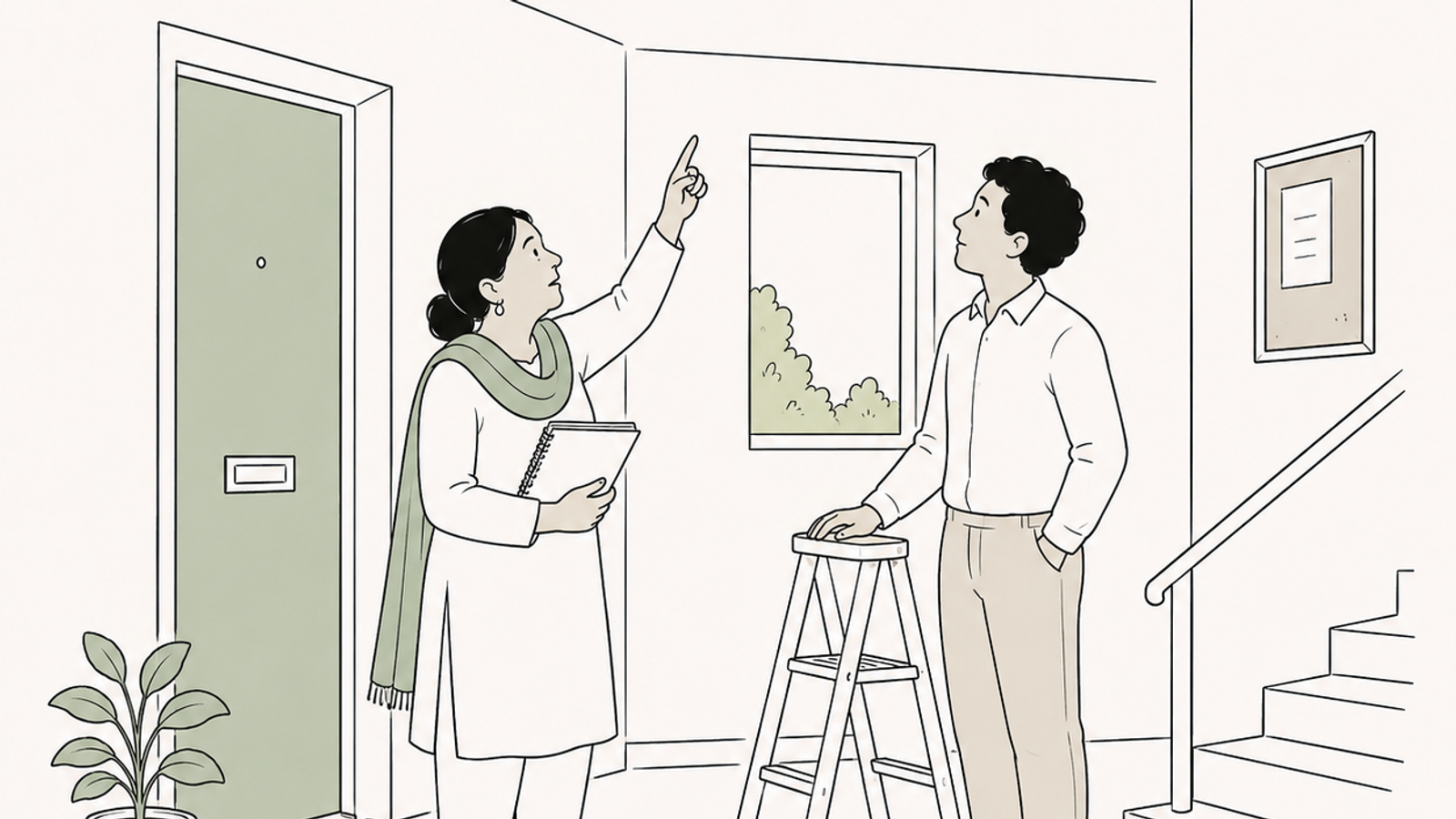
Repairs are the reason a lot of buildings go for Right to Manage in the first place. The leak that took a year. The stairwell light nobody replaced. Once your RTM company takes over, that becomes yours to sort, and for the first time you choose who does the work and how fast.
The short version. Your lease decides who fixes what. Broadly, the RTM company looks after the structure, the outside and the shared parts, and each leaseholder looks after the inside of their own flat. Your job as a director is to stay on top of both the small repairs and the big planned jobs, choose contractors carefully, and follow the consultation rules once the spend gets large.
In this guide:
- Who is responsible for what
- Day-to-day repairs and planned maintenance
- Finding contractors and getting the work done
- If your building has site staff
- The standards you work to
Who is responsible for repairs in a block of flats?
Start with the lease, because the lease draws the line, and leases vary. As a general rule the split runs like this. The leaseholder looks after the inside of their flat: the internal walls, ceilings, plasterwork and floors. The RTM company picks up what the landlord used to be responsible for: the outside of the building, the structure such as the walls and the roof, the shared areas, and the pipes and wiring that serve the whole building.
Read your building's leases properly before you start making decisions. The awkward cases are usually balconies, windows and pipework, where it comes down to how the flat is defined in the lease. If your block is a new build, one more thing is worth knowing: the developer's warranty normally covers defects for the first two years, such as a fault in how the electrics, plumbing or windows were installed, and major structural problems for the first ten, such as a serious problem with the foundations or roof. Check what is still in date before you spend service charge money on something already covered.
Day-to-day repairs and planned maintenance
The work splits into three streams, and it helps to think about them separately.
- Reactive repairs: the leak, the broken entry phone, the failed stairwell light. Things that break and need fixing now.
- Ongoing services: the regular running of the shared parts, such as cleaning, lighting, heating, grounds maintenance and any caretaking or porterage.
- Planned and cyclical maintenance: the jobs you can see coming, such as redecorating the outside, servicing the lift or the boiler, and eventually the roof.
The third stream is where residents running their own building have the advantage, because these are the jobs you can plan for. The earlier you see one coming, the more time you have to build the reserve fund for it and to get the price right, rather than taking whatever is quickest. A simple schedule of what needs doing and roughly when, paired with the reserve fund we cover in our guide to RTM service charges, is most of the discipline you need.
Finding contractors and getting the work done
This is where taking over changes things most. Under the freeholder, the contractors were chosen for you. Now the choice is yours. If you are self-managing, you find and negotiate with suppliers directly, which means more control and, done properly, better value. It is also where the money is: our guide on whether your building could save thousands runs the numbers.
The practical advice LEASE gives RTM companies is worth following closely:
- meet potential contractors on site rather than taking a price over email
- get at least two quotes so you can compare value properly
- check that suppliers have appropriate insurance cover
- review your contracts regularly, and check the notice period before you switch supplier
Two thresholds to keep in mind. If you are signing a contract that runs for more than 12 months, you may need to follow the Section 20 consultation process first. Contracts of 12 months or less, such as buildings insurance, do not need it. The same consultation rules bite on any repair that would cost a single leaseholder more than £250. Both are covered in our guide to Section 20 consultation.
If your building has site staff
Some blocks have a caretaker, warden or porter. If yours does, the RTM company becomes their employer at handover, and the transfer is governed by TUPE, the rules that protect employees when a service changes hands. Get specialist advice before changing anyone's terms and conditions. Some RTM companies find it simpler to engage staff through an agency, so the agency is the direct employer, though there are fees for that. And if a member of staff lives on site rent-free in a flat the landlord still owns, you will need to agree arrangements with the landlord.
The standards you work to
There is a benchmark for all of this. RTM companies should follow a government-approved code of practice, and for most buildings that is the Service Charge Residential Management Code published by RICS. Retirement housing has its own, published by the ARHM. Following one is not strictly mandatory, but it carries more weight than that sounds: failing to comply with a code is one of the grounds on which someone can apply to the tribunal to appoint a new manager, or to bring the right to manage to an end. Treat the code as the standard your building works to and you are unlikely to have that conversation.
Where this leaves you
Repairs are the part of the job residents feel most, and the part where taking control shows up fastest. You decide what gets fixed, who fixes it, and in what order. Keep a simple record of what has been done and what is coming, get quotes instead of accepting the first price, and work to the code. That is the whole discipline, and it sits inside the wider role our overview of RTM director responsibilities sets out. Next in this series we look at Section 20 consultation, the rules that apply once a job gets big. And if taking over your building is still on the to-do list, check whether yours qualifies.
Sources and further reading
- LEASE: Running a right to manage company
- LEASE: Dealing with contractors
- LEASE: Repairs and maintenance in leasehold properties
- LEASE: Section 20 consultation
- GOV.UK: Transfers and takeovers (TUPE)
- legislation.gov.uk: Landlord and Tenant Act 1985
Ready to take control of your building?
See what you could save and find the right route for your block.